
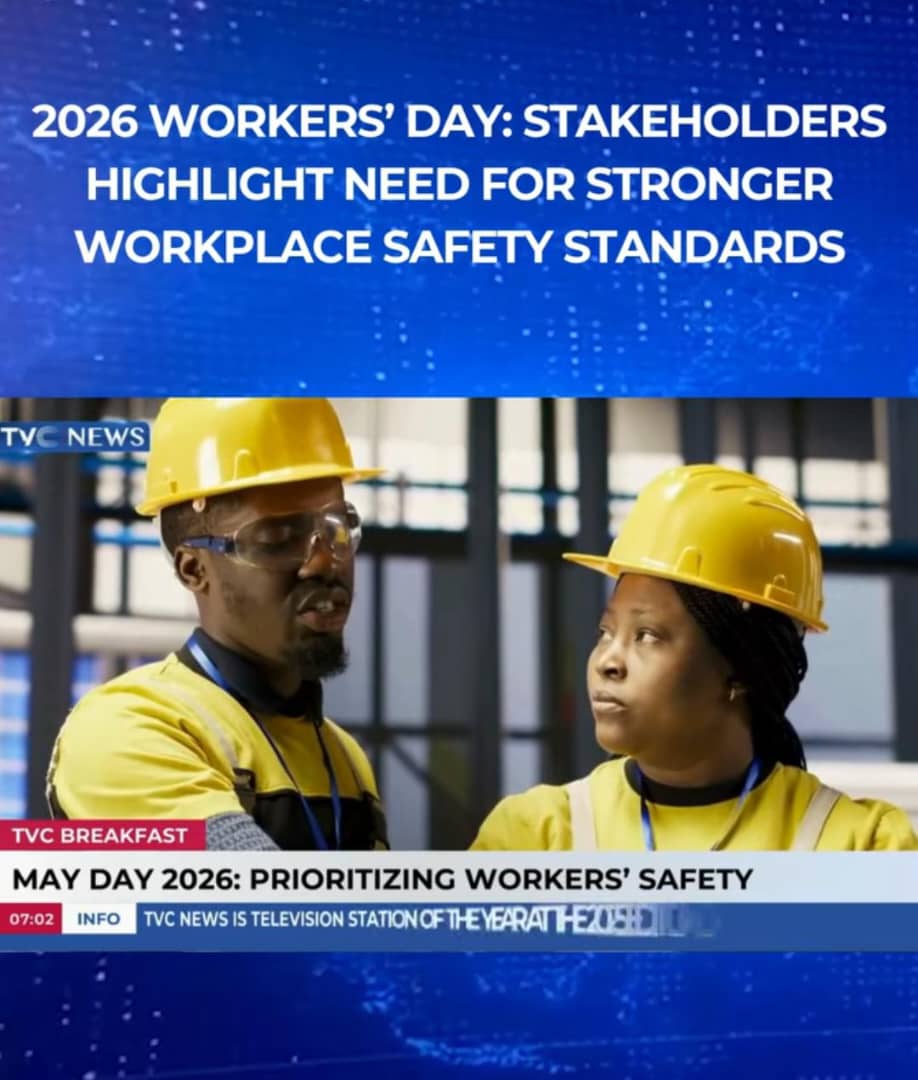
2026 Workers’ Day: Stakeholders Call for Stronger Workplace Safety Standards
May 01, 2026 · By Airdroptheef
2026 Workers’ Day: Stakeholders Call for Stronger Workplace Safety Standards
As Nigeria joins the rest of the world to commemorate International Workers' Day, industry leaders, labour advocates, and safety professionals are once again drawing attention to a long standing issue, workplace safety. Despite technological progress and increased awareness, many Nigerian workers continue to face avoidable risks on the job, raising concerns about enforcement and accountability.
This year’s observance goes beyond celebration. It serves as a moment of reflection on the conditions under which millions of people work daily, particularly in sectors such as construction, manufacturing, transportation, and oil and gas. Stakeholders argue that while policies exist, their implementation remains inconsistent, leaving gaps that expose workers to injuries, long term health issues, and even fatalities.
Speaking on the issue, the National President of the National Industrial Safety Council of Nigeria, John Obajinmi, emphasized that workplace hazards are often preventable with the right systems in place. According to him, ensuring safety is not just a regulatory obligation but a strategic investment in productivity and national development.
He highlighted that the Federal Government of Nigeria has introduced a National Policy on Occupational Safety and Health aimed at clearly defining the responsibilities of employers, employees, and regulatory bodies. The policy is expected to strengthen compliance, improve monitoring, and promote a culture where safety is treated as a priority rather than an afterthought.
However, experts note that policies alone are not enough. They stress the importance of regular inspections, proper training, and the provision of protective equipment. Many small and medium sized enterprises, in particular, are said to lag behind in adopting modern safety practices, often due to cost concerns or lack of awareness.
Labour groups are also urging workers to be more proactive by reporting unsafe conditions and demanding better protections. They argue that a collaborative approach, where government enforces, employers invest, and workers participate, is the only way to achieve lasting improvements.
Beyond compliance, the conversation is shifting toward the economic benefits of safer workplaces. Studies consistently show that organisations with strong safety cultures experience fewer disruptions, lower healthcare costs, and higher employee morale. As Obajinmi pointed out, a healthy workforce directly contributes to improved performance and sustainable growth.
As the country marks Workers’ Day in 2026, the message from stakeholders is clear: protecting workers is not optional. It is a shared responsibility that requires continuous effort, stronger enforcement, and a genuine commitment to valuing human life above all else.
Related Articles

Unizik reacts following the d3ath of diabetic law student at University Medical Centre
Aug 23, 2025 · Temidayo1986

In USA,no one has asked me to switch off my phone in 10 years-Sowore.
Aug 25, 2025 · Temidenike

“I’m so thick-skinned - UK Conservative Party leader, Kemi Badenoch says Argentinian president would be the ‘template’ for her government"
Jul 25, 2025 · shareops
Comments
No comments yet. Be the first to comment!